
Hungary
Hungary is in the heart of Europe, within the Carpathian Basin. Its landscape is diverse, shaped by rivers, plains and low mountain ranges. With a population of around 9.6 million, Hungary combines over 1,000 years of cultural heritage, integrating both Eastern and Western influences. The country offers a stable, safe and well-connected environment for living, working and investing.
Baranya
Baranya County is situated in the Southern Transdanubian region, close to the Croatian border, providing direct access to Southeast European markets. Cultural tourism plays an important role in the local economy, supported by a rich historical and natural environment.
The region benefits from a mild, Mediterranean-like climate and diverse natural assets. Its well-known thermal spa towns—Mohács, Szigetvár, Siklós, Harkány and Barcs – offer recognised medical and wellness services, particularly in the treatment of musculoskeletal, rheumatologic, dermatological and gynaecological conditions.
Pécs
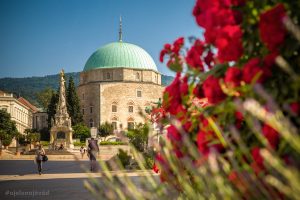 Pécs has a population of approximately 145,000 and offers a high quality of life, combining the advantages of a regional centre with a human-scale urban environment. The city is a vibrant cultural and educational hub.
The University of Pécs, one of Hungary’s leading universities, plays a key role in the city’s life, contributing to innovation, internationalisation and the availability of a skilled workforce. Pécs has a rich historical heritage visible throughout the city and gained international recognition as European Capital of Culture in 2010.
Szentágothai Research Centre
The Szentágothai Research Centre, established in 2012, is a major hub for research, development and innovation (R&D&I) in the region. It operates as an interdisciplinary centre of excellence within the University of Pécs.
The Centre collaborates closely with the Medical School, the Faculty of Sciences, and the Faculty of Engineering and Information Technology, applying international research standards and supporting partnerships with industry and international stakeholders.
World Heritage
The Early Christian Necropolis of Pécs is a UNESCO World Heritage Site. Dating back to the 4th century, it forms part of the Roman settlement of Sopianae (present-day Pécs).
The site includes underground burial chambers with above-ground memorial chapels, notable for both their architectural structure and richly decorated Christian murals. It represents one of the most significant early Christian archaeological sites in Europe.
Zsolnay porcelain
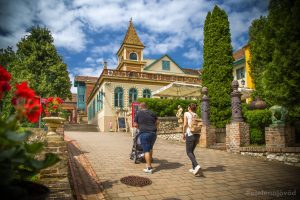 The Zsolnay Porcelain Manufacture, founded in the 19th century in Pécs, is internationally renowned for its high-quality ceramics. Its signature eosin glaze gives porcelain a distinctive metallic sheen, often in green or iridescent tones.
Another key product is pyrogranite, a durable ornamental ceramic widely used in architecture for roof tiles and decorative elements. Today, the Zsolnay heritage remains an important part of the city’s cultural and creative economy.
Gastronomy
Baranya County has a rich gastronomic tradition, forming an integral part of its cultural identity and tourism offer. Local food and wine culture is celebrated through numerous festivals, including the Red Wine and Rosé Festival in Villány, the Ramsons Festival in Orfű, the Fish Soup and Bean Goulash Festival in Mohács, and the Harvest Festival in Harkány.
In addition, the Mecsek Greenway promotes local products, services, traditions and gastronomy across villages along the Mecsek Hills, supporting sustainable and experience-based tourism.
Thermal waters
Baranya County is rich in thermal and medicinal waters, each with a unique mineral composition. These waters are widely used for therapeutic purposes, particularly in the treatment of musculoskeletal, rheumatologic, dermatological and gynaecological conditions.
The most visited spa destinations in the region include Harkány, Siklós and Szigetvár, attracting both domestic and international visitors.